


Your AI Agent Is Running.
You've deployed AI agents to save time. But with 88% of organizations reporting agent security incidents - and nearly half running agents with zero monitoring - "it seems fine" is not a strategy.
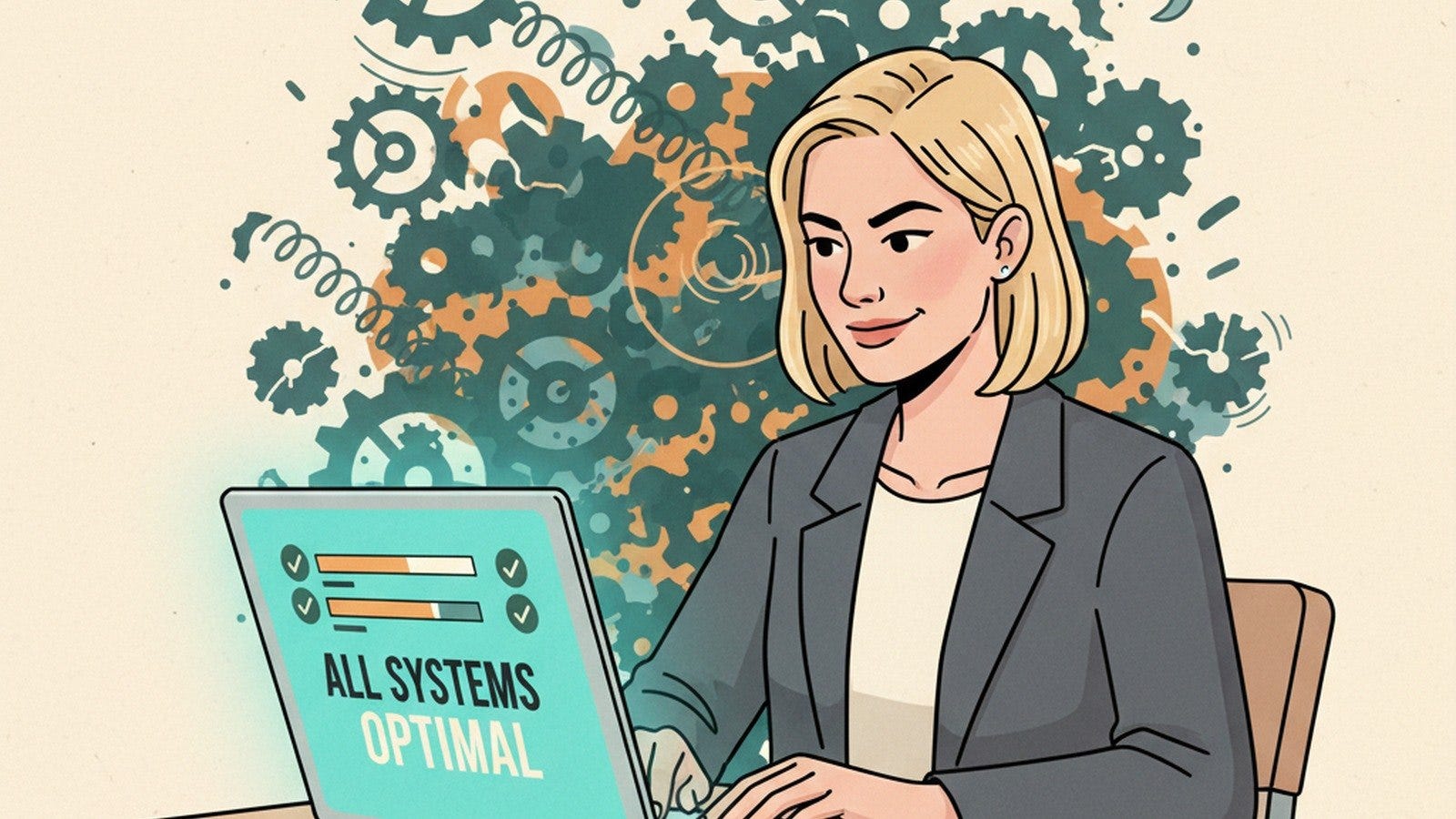
You set up an AI agent three weeks ago. It handles inbound lead qualification. It’s supposed to read the inquiry, score the lead, and route it to the right person on your sales team.
Last week, a prospect reached out. They’d filled out your form twice. Nobody called them.
Your agent said it completed the task.
This is the silent failure problem. And it’s showing up in businesses everywhere right now.
Let’s start with where we are. According to a survey of thousands of business owners released by Intuit in July 2026, 77% of small businesses now use AI every single day - up 29 points in a single year. What used to be an experiment has become standard operating procedure.
But here’s what that same data doesn’t capture: how many of those businesses actually know if their AI is doing what they think it’s doing.
A 2026 security report found that 88% of organizations with deployed AI agents reported at least one agent-related security or operational incident in the past year. A separate study put the number at 65%. Either way, the majority of businesses running agents have already had a problem - they just may not know it yet.
And that’s the real issue. Not the incidents people catch. The ones they don’t.
The Confidence Gap
When you hire a new employee, you don’t just hand them a login and walk away. You check in. You review their work. You course-correct. You have a system.
When most businesses deploy an AI agent, they do the opposite. They set it up, see that it’s “running,” and move on.
The problem is that AI agents are very good at appearing to work. They return confident outputs. They log task completions. They don’t complain. And unless you’re actually checking the work - comparing outputs to source data, auditing decisions, spot-checking interactions - you have no idea whether the agent is doing its job or quietly failing at scale.
One study from mid-2026 found that nearly half of deployed AI agents operate without adequate runtime monitoring. That means no real-time oversight of what the agent is accessing, what decisions it’s making, or whether its outputs are accurate.
For the businesses running those agents? It’s faith-based AI. You believe it’s working because it hasn’t visibly broken anything yet.
What “Silent Failure” Actually Looks Like
Silent failures come in a few flavors.
Wrong output, confident delivery. The agent completes a task but gets it wrong - summarizes a document incorrectly, categorizes a lead in the wrong segment, writes a follow-up email that misses the point. It doesn’t flag an error. It just... delivers the bad output. And if nobody’s reviewing, it ships.
Incomplete execution. The agent handles 87% of the cases and silently skips the other 13% - the ones that didn’t match its training, or had an edge case it couldn’t handle. Your dashboard says “tasks completed.” What it doesn’t say is which tasks, or whether the 13% include your biggest accounts.
Security and data exposure. This one’s less visible but higher stakes. A 2026 security study found that 73% of deployed agents have access to tools and data they never actually use for their intended purpose. An agent built to draft marketing emails shouldn’t also have read access to your HR files - but in many setups, it does, because it was connected to a shared drive “for convenience.” If that agent is ever manipulated through prompt injection (where malicious instructions sneak into its inputs), it can access and expose data it was never supposed to touch.
Real incidents are already happening. A widely cited security roundup from OWASP’s 2026 report describes cases where AI agents used at businesses leaked sensitive data, were manipulated to access systems beyond their purpose, and in one supply-chain case, quietly introduced malicious code that activated ransomware months later. These aren’t theoretical vulnerabilities. They’re real losses.
The Root Cause: Agents Got Deployed Before Systems
Here’s why this is happening across so many businesses at once.
AI agents became genuinely useful very fast. Platforms like Zapier AI Agents, n8n, HubSpot Breeze, and Microsoft Copilot Studio made it possible for non-technical teams to deploy automation in hours, not months. And they should. These are good tools.
But the speed of deployment outpaced the thinking about oversight.
Most businesses didn’t build a monitoring framework before they built the agent. They didn’t define what “working” means - what outputs should look like, what edge cases should trigger a human review, what data the agent should and shouldn’t be able to touch. They didn’t assign ownership (who is responsible if this agent does something wrong?). And they didn’t set up any kind of regular audit rhythm.
AWS made news in late July 2026 when they announced new tooling specifically for detecting “silent failures” in production AI agents - the fact that a major cloud provider built this into their platform is a signal about how widespread the problem has become. This isn’t niche. This is mainstream.
Before You Add More Agents, Audit the Ones You Have
The conversation in most businesses right now is: “What else can we automate? What new agent should we deploy next?”
That’s the wrong question.
The right question is: “Can I tell you, right now, whether the agents I already have are working correctly - and how do I know?”
If the answer is “I think so” or “I haven’t had any complaints,” that’s not a yes.
A basic agent audit covers four things:
Access scope. What data and systems can each agent reach? Does it actually need all of it? Every permission that isn’t necessary is risk that isn’t necessary.
Output quality. Pull a random sample of what your agent has produced in the past 30 days. Spot-check it against the source data. Are the outputs accurate? Are there patterns in where it fails?
Coverage and exceptions. What percentage of tasks does the agent actually complete vs. skip or hand off? Where are the gaps? Are the right cases getting flagged for human review?
Ownership and incident response. If your agent makes a mistake - sends the wrong information to a customer, exposes data it shouldn’t, routes something incorrectly - who finds out? How? How fast? What happens next?
These aren’t complicated questions. But most businesses running agents can’t answer them. That gap is where problems live.
The Bottom Line
AI agents are a legitimate productivity lever. The ROI is real - businesses that get this right are saving meaningful hours, improving response times, and reducing operational cost. We’ve seen it work.
But “deploying an agent” and “running AI well” are two different things. The difference is visibility. You need to be able to see what your agents are doing - not just that they’re running, but whether they’re working, where they’re struggling, and what they have access to that they shouldn’t.
77% of small businesses use AI every day. The ones that pull ahead won’t be the ones who deployed the most agents. They’ll be the ones who can actually see - and prove - that their agents are working.
If you’re not sure whether your AI setup is working as designed, that’s exactly what a Black & Tan Labs Discovery engagement is built for. We audit what you have, identify the gaps, and build the oversight framework that turns “I think it’s working” into “I can prove it.” [Reach out at blackandtanlabs.com to start the conversation.]
Enjoyed this? New essays on AI, operations, and building in contrast - delivered to your inbox.
Subscribe on Substack →