


Everybody Wants AI. Nobody Knows How to Make It Work.
Small business AI adoption has doubled. The success rate hasn't. Here's what separates the 5% who get real ROI from the 95% who waste their money.
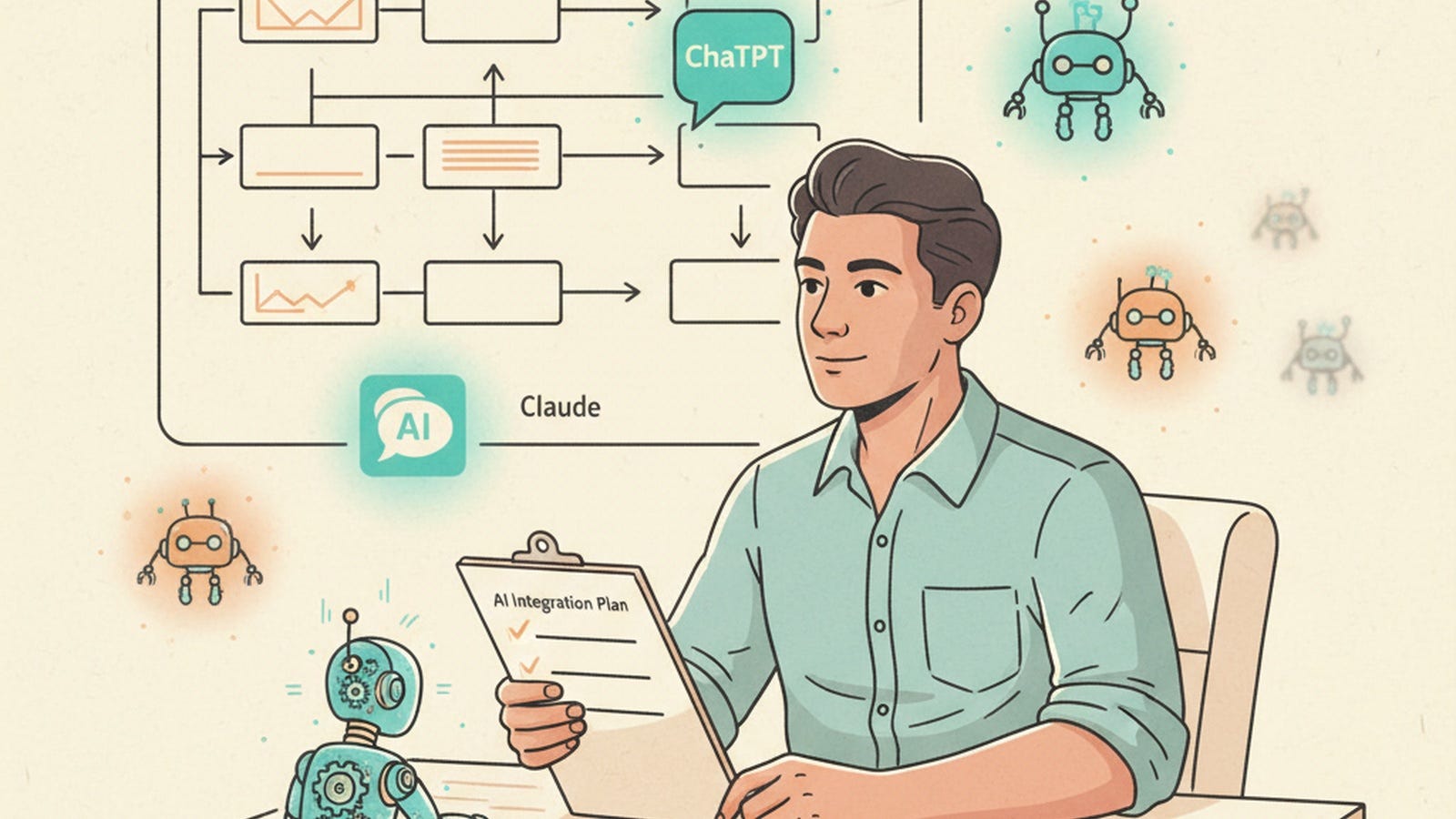
Here’s a number that should stop you cold: UK small business AI adoption just doubled to 47 percent. That is not a typo. In one year, nearly half of all small businesses in Britain went from “maybe someday” to “we’re using this.” The same trend is playing out in the US. Pax8 research shows SMBs are adopting AI faster than they are building strategies to manage it. OpenAI launched a “ChatGPT for Small Business” program. Anthropic released Claude for Small Business with built-in automation workflows. The AI industry has decided this is the year of the SMB, and they are marketing accordingly.
But here is the number that matters more: 95 percent of AI adoptions fail. That figure comes from Forbes, and it is consistent with what McKinsey found in its latest “State of AI in 2026” report - most organizations are spending on AI, but the gap between those seeing real ROI and those throwing money at nothing is widening into a canyon. The report calls it a “two-speed race.”
If you are a small business owner, you are standing at the edge of that canyon right now with a credit card in your hand and a vendor on the phone telling you their tool will change everything. You want to believe them. Your competitor is already using AI. You feel the pressure. But the research is screaming something you will not hear from a sales demo: the tool is not the problem.
The problem is that you do not have an AI strategy. You have an AI pile.
Let me explain what I mean. When most SMB owners decide to “do AI,” they go shopping. They subscribe to ChatGPT. They try Claude. They buy a copywriting tool, a customer service bot, an automation platform. Maybe they have an employee “figure out” how to use these things. Six months later, the subscriptions are still running, the tools are barely used, and nobody can point to a single measurable outcome. That is the 95 percent. And it is not because the tools are bad. It is because the approach is backward.
The successful 5 percent do something different. They start with a specific business problem - not a technology. They ask: what is the most expensive, time-consuming, or error-prone thing we do every week that a machine could help with? Then they pick exactly one tool to solve exactly that problem. They define what success looks like in dollars or hours before they spend a dime. They train one person to own the rollout. And they measure the result before adding a second tool.
This is not complicated. It is not even particularly technical. It is strategic discipline. And it is the single biggest predictor of whether your AI investment will pay off or join the 95 percent graveyard.
The New York Federal Reserve published research this month showing that businesses using AI to transform work are not cutting jobs - they are augmenting their teams. That is the story of the successful 5 percent. They are not replacing people with AI. They are giving their best people AI-powered leverage. A customer service rep who handles 20 tickets a day becomes someone who handles 60. A bookkeeper who takes two days to close the month now does it in four hours. The human stays. The tedious part gets automated. The business gets faster and more profitable.
But here is the trap that most owners fall into: they try to do all of this at once. They buy the agent, the chatbot, the content generator, and the analytics platform in the same quarter. They subscribe to every tool their employees ask for. Then nobody has time to learn any of them properly, the tools pile up unused, and the owner concludes that “AI doesn’t work for our business.”
It does work. But only when you treat adoption like any other business initiative - with a plan, a metric, and a deadline. Not like a software subscription you can turn on and forget.
This is where a consultancy like Black&Tan Labs comes in. Not to sell you a tool. Not to pitch you a platform. To do the unglamorous work of figuring out which processes in your business are actually worth automating, what a successful implementation looks like, and how to get the first win under your belt before you scale. That is the gap the market has created. Tools are abundant. Strategy is scarce.
The AI industry wants you to believe that the answer is the next release, the next model, the next agent platform. But the data tells a different story. The companies getting ROI from AI are not the ones with the most advanced tools. They are the ones with the most disciplined approach. They start small. They measure everything. They build on wins. And they never, ever confuse buying a tool with building a strategy.
If you are ready to be in the 5 percent rather than the 95 percent, stop looking for the perfect AI tool. Start looking for the right first problem to solve. That one shift in thinking will save you more money and time than any subscription ever could.
Enjoyed this? New essays on AI, operations, and building in contrast - delivered to your inbox.
Subscribe on Substack →