


86% of Small Businesses Are Using AI Wrong
The AI adoption numbers look incredible. The integration numbers look embarrassing. Here's what separates the winners from the dabblers.
Every major survey in 2026 tells the same story. The U.S. Chamber of Commerce reports that 89% of small businesses now use AI in some capacity. Goldman Sachs puts the number at 76%. The SBE Council at 82%. By any measure, the adoption curve over the last three years - from 36% in 2023 to nearly 90% today - is the fastest technology uptake ever recorded among SMBs.
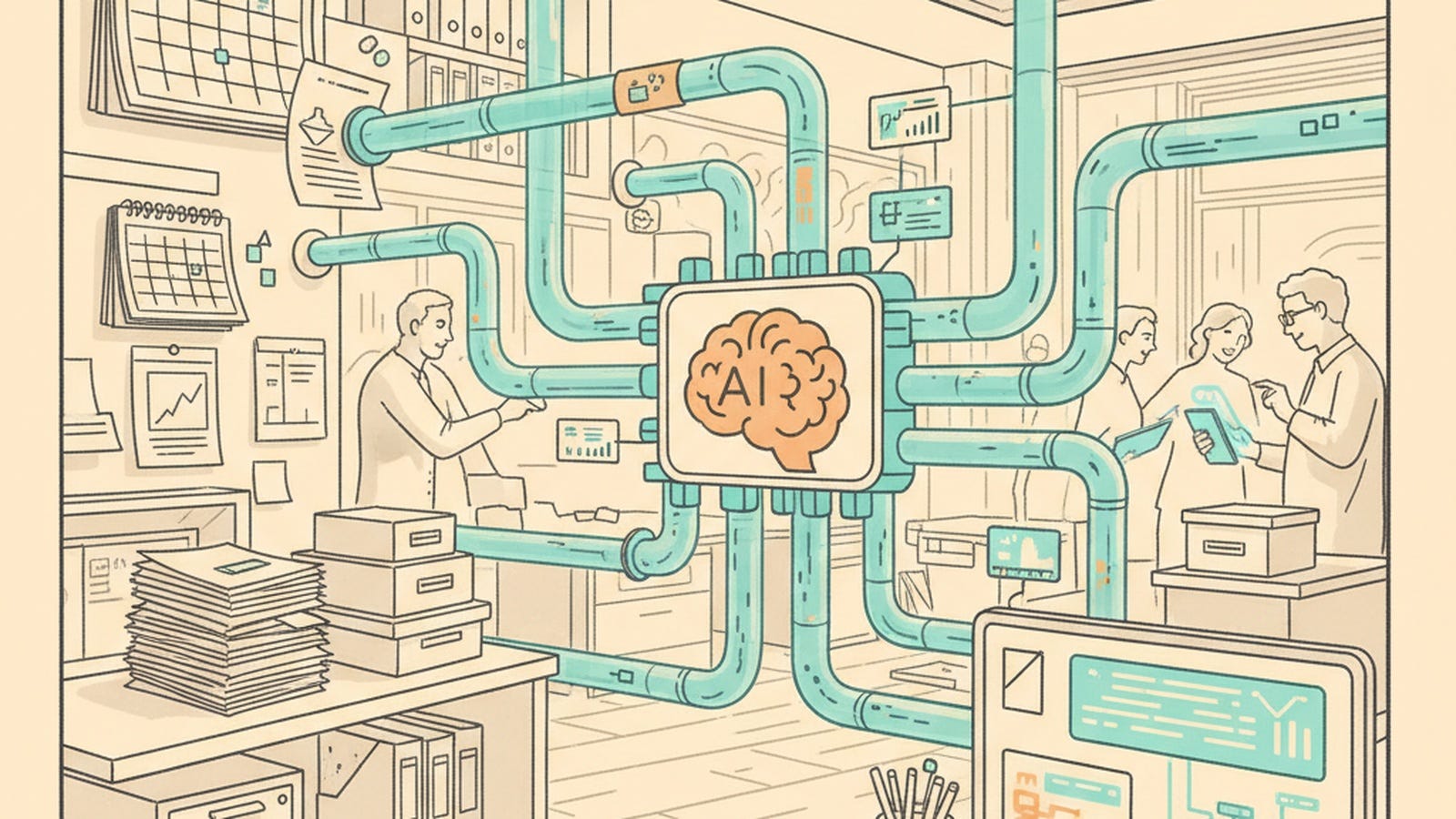
So the AI problem is solved, right?
Not even close.
The number that actually matters comes from the same Goldman Sachs survey of 1,256 small business owners, conducted in partnership with Babson College earlier this year: only 14% of AI-using small businesses have fully integrated the technology into their core operations.
That means 86% of businesses that think they’re “using AI” are running experiments, not operations. They’re treating ChatGPT like a smarter search engine. They’re pasting AI-generated text into workflows that haven’t changed since 2022. They’re spending money on subscriptions but not changing how their business actually runs.
And the gap between the 14% and the 86% isn’t small. According to Grant Thornton’s 2026 AI Impact Survey, organizations with fully integrated AI are nearly four times more likely to report AI-driven revenue growth than those still piloting - 58% versus 15%. Four times. That’s not a marginal difference. That’s a separation into two different classes of business.
Where Most Businesses Get Stuck
The Goldman Sachs survey identified three main barriers keeping the 86% from crossing into genuine integration: data privacy and security concerns (50% of respondents), lack of technical expertise (49%), and difficulty choosing the right tools (48%).
Notice what’s not on that list. Nobody said “AI is too expensive.” Nobody said “the technology isn’t good enough.”
The barrier is capability, not cost. And the most telling statistic is this: 73% of small business owners say their business would benefit from more training and implementation resources - not more tools, not cheaper subscriptions, but help knowing what to do with what they already have.
This maps perfectly to what we see on the ground at Black & Tan Labs. Chicago SMBs aren’t skeptical about AI. They’ve bought in. They’ve got the subscriptions. But they’re stuck at what the integration experts call Level 2 - using AI features embedded inside existing tools like HubSpot or Canva - without ever reaching Level 3, where AI gets connected into automated, multi-step workflows that actually change how work gets done.
What the 14% Do Differently
The businesses that have crossed the integration gap share a common pattern. They didn’t start with a tool. They started with a process that hurt.
A regional property management company we studied automated exactly one workflow - invoice processing - using an AI-assisted document tool connected to their accounting system. Eight weeks from kickoff to go-live. The result: invoice processing dropped from three days to four hours. Data entry errors fell by 90%. The team recovered 60 hours of administrative time per month, which they redirected into vendor negotiations that produced $18,000 in annual savings.
A dental practice deployed a single AI scheduling agent. No-show rates dropped from 15% to 6%. They recovered an estimated $90,000 per year in unfilled chair time.
An e-commerce company with 20 staff deployed an AI customer support agent. Support costs dropped $4,500 per month. Customer satisfaction scores went from 3.2 to 4.6 out of 5.
Every one of these businesses picked one high-friction workflow, measured their baseline, deployed one solution against it, and proved ROI before expanding. Not one of them started with an “AI strategy.” They started with a problem.
The Five Levels of AI Integration
The integration experts have a useful framework for thinking about where your business sits:
Level 1 - Prompt-and-paste. Using ChatGPT or Claude in a browser tab. Copy output, paste into your destination. This is where roughly half of all AI-using SMBs live.
Level 2 - Embedded features. Using AI built into tools you already own (HubSpot AI, Notion AI, Canva AI). Better, but still one tool at a time.
Level 3 - Connected automations. Using Zapier, Make, or n8n to connect AI to multi-step workflows. Email arrives, AI classifies it, routes it to the right person, logs it in your CRM - all automatically.
Level 4 - Workflow automation. End-to-end processes run on AI. Leads come in, get enriched, scored, nurtured, and booked without human touch. Staff manages exceptions, not routines.
Level 5 - Agentic operations. AI agents monitor your business, detect anomalies, take corrective action, and report results.
The 14% are at Levels 3-5. The 86% are stuck at Levels 1-2.
Here’s the part that should grab your attention: the tools to move from Level 2 to Level 3 cost between $9 and $50 per month. The barrier is not money. It’s knowing which connections to make.
Where You Start
If you’re running a small or mid-size business and you realize you’re in the 86%, here’s your move:
Step one: Stop treating AI like an app you download. Start treating it like infrastructure you design. An AI tool that isn’t connected to your CRM, your email, your invoicing, or your scheduling is a productivity aid, not a business asset.
Step two: Pick one process. A single high-volume, repetitive, rules-based workflow that costs you time or money. Could be invoice processing. Could be scheduling. Could be lead response. Pick one, measure the baseline, deploy one solution, and prove it works before you touch anything else.
Step three: Make the human handoff explicit. The most successful deployments don’t remove humans - they define clear boundaries for what the AI owns versus what needs a person. The dental practice’s AI handled scheduling, not complex insurance questions. The e-commerce AI handled routine returns, not fraud. Design the escalation path before you flip the switch.
The Window Is Open But Not Forever
Goldman Sachs projects that the gap between AI-integrated and AI-dabbling businesses will become visible in revenue data by Q2 2027. Businesses that invest in real integration now will have an 18- to 24-month window where they operate at a meaningful advantage over competitors who bought tools but skipped the implementation.
IDC predicts that by 2027, 70% of medium-sized businesses will achieve digital payback at twice the rate of previous technology cycles - driven by AI and agentic AI adoption. That’s not a forecast about large enterprises. That’s a forecast about companies your size.
The tools are cheap. The data is clear. The gap between adoption and integration is the single biggest AI opportunity for SMBs in 2026.
The question isn’t whether you should use AI. You already are.
The question is whether you’re going to keep dabbling - or whether you’re ready to actually build something that works.
At Black&Tan Labs, we help Chicago-area businesses close the integration gap. Our Discovery engagement maps your existing workflows, identifies the highest-ROI automation opportunities, and builds a roadmap from Level 2 to Level 4 - typically in under four weeks. If you’re tired of buying AI subscriptions without seeing results, let’s talk.
Enjoyed this? New essays on AI, operations, and building in contrast - delivered to your inbox.
Subscribe on Substack →